

Nose surgery in Bangkok is offered at hospitals and specialized plastic surgery clinics, with procedures ranging from nose augmentation to revision rhinoplasty. Patients should consider surgeon qualifications, surgical techniques, facility safety standards, and postoperative care to find an option suited to their needs and expectations.
Where Can You Get Nose Surgery in Bangkok?
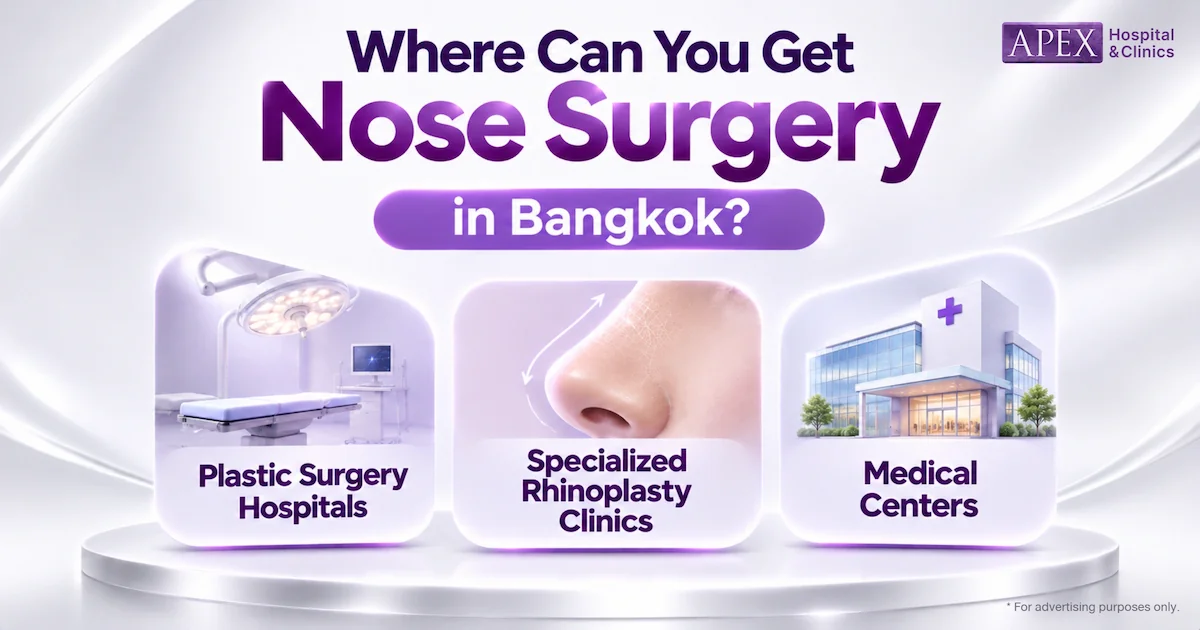
Patients considering nose surgery in Bangkok can receive consultations at licensed hospitals, specialized rhinoplasty clinics, or medical centers offering surgical services.
- Plastic Surgery Hospitals: Provide surgical facilities, anesthesia support, and services for complex rhinoplasty procedures.
- Specialized Rhinoplasty Clinics: Offer procedures such as nose augmentation, nasal tip refinement, and revision rhinoplasty, depending on their capabilities.
- Medical Centers: Provide surgical consultations, personalized treatment planning, and access to suitable operating facilities.
Before undergoing nose surgery in Bangkok, patients should verify the surgeon’s qualifications, surgical facility standards, and postoperative care arrangements.
What to Look for Before Getting Nose Surgery in Bangkok
Before undergoing nose surgery in Bangkok, patients should consider these five key factors to ensure surgical safety and appropriate treatment.
1. Qualified and Experienced Rhinoplasty Surgeons
Look for qualified surgeons experienced in rhinoplasty who assess nasal anatomy, breathing function, and surgical risks. Verify medical registration through the Medical Council of Thailand and check specialist qualifications separately.
2. Licensed and Properly Equipped Surgical Facilities
Nose surgery should be performed in an appropriately licensed facility with suitable operating equipment, anesthesia monitoring, infection-control measures, and emergency support. Complex procedures may require hospital-based surgical facilities.
3. Available Nose Surgery Techniques
Different rhinoplasty techniques address specific nasal concerns and surgical requirements.
| Nose Surgery Technique | Main Purpose |
|---|---|
| Closed Rhinoplasty | Reshapes the nose through internal incisions |
| Open Rhinoplasty | Provides greater access for detailed nasal reshaping |
| Nose Augmentation | Enhances nasal bridge height or projection |
| Revision Rhinoplasty | Corrects concerns from previous surgery |
| Functional Rhinoplasty | Addresses structural breathing problems |
The most suitable technique depends on nasal anatomy, treatment goals, and surgical complexity.
4. Transparent Nose Surgery Pricing
Nose surgery costs in Bangkok vary depending on the procedure, surgeon, anesthesia, and surgical materials. Before booking, request a quotation covering surgeon fees, anesthesia, facility charges, implants or grafts, medications, and follow-up appointments.
5. Postoperative Care and Follow-Up
Reliable postoperative care should include scheduled examinations, wound-care guidance, recovery instructions, and complication management. Patients should confirm follow-up arrangements before undergoing nose surgery in Bangkok, especially when traveling from overseas.
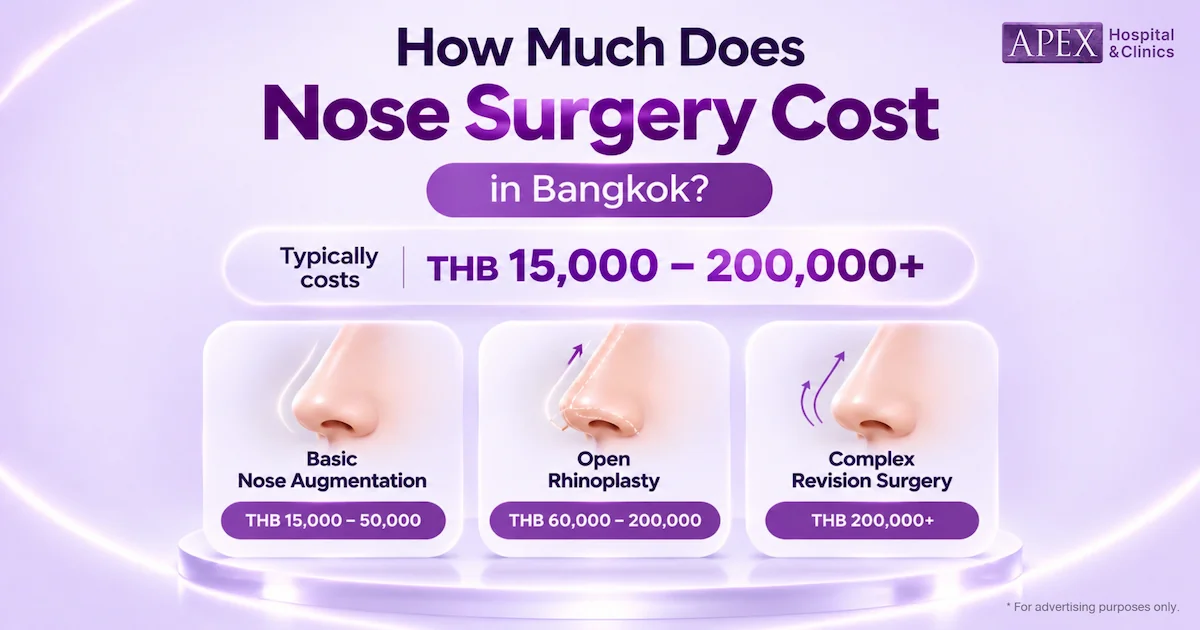
How Much Does Nose Surgery Cost in Bangkok?
Nose surgery in Bangkok typically costs THB 15,000–200,000 or more. Basic nose augmentation ranges from THB 15,000–50,000, while open rhinoplasty costs THB 60,000–200,000. Complex revision surgery may exceed THB 200,000, depending on the technique, materials, and surgical complexity.
Where to Consider Nose Surgery in Bangkok: APEX Hospital & Clinics
APEX Hospital & Clinics offers nose surgery in Bangkok, with rhinoplasty options tailored to individual nasal anatomy and aesthetic goals.
- Rhinoplasty Options: Open and closed surgical techniques.
- Nasal Assessment: Evaluation of nasal structure and facial proportions.
- Surgical Planning: Discussion of suitable techniques, risks, and expected results.
- Recovery: Postoperative instructions and follow-up care.
For more information or a consultation, contact APEX via WhatsApp
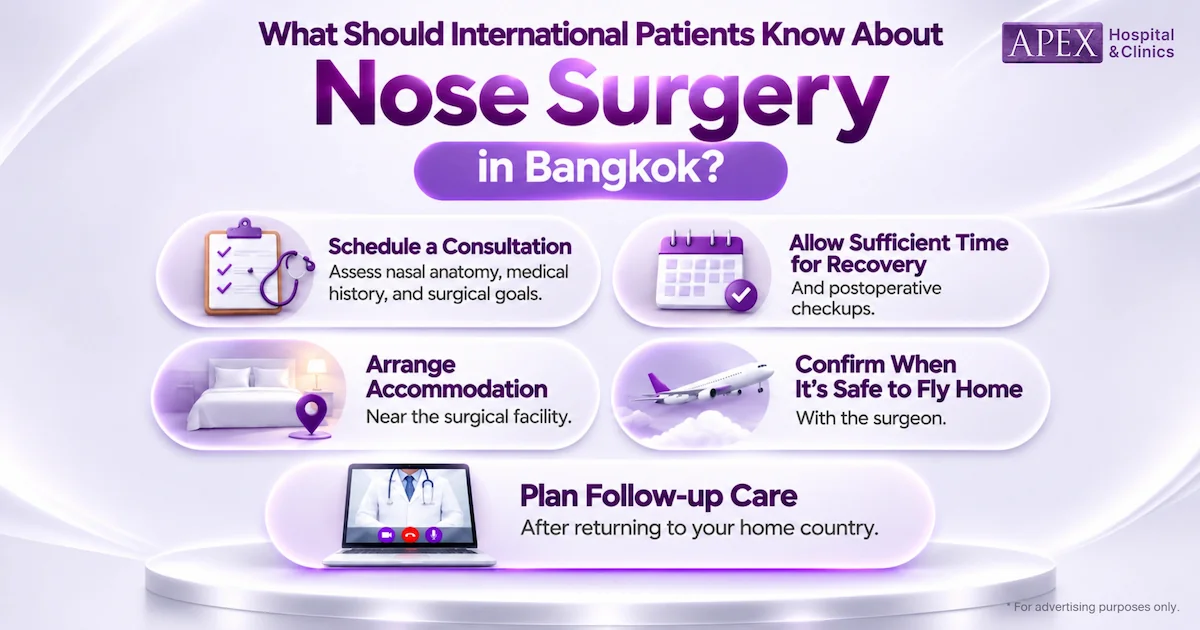
What Should International Patients Know About Nose Surgery in Bangkok?
International patients considering nose surgery in Bangkok should plan their travel around surgery, recovery, and follow-up care.
- Schedule a consultation to assess nasal anatomy, medical history, and surgical goals.
- Allow sufficient time for recovery and postoperative checkups.
- Arrange accommodation near the surgical facility.
- Confirm with the surgeon when it is safe to fly home.
- Plan follow-up care after returning to your home country.
Initial swelling typically improves within a few weeks, but final nasal results may take 12 months or longer.
Frequently Asked Questions About Nose Surgery in Bangkok
Who Is a Good Candidate for Nose Surgery in Bangkok?
Suitable candidates include individuals seeking to improve nasal shape, proportions, or structural concerns. A surgeon must assess nasal anatomy, medical history, and expectations before surgery.
What Types of Nose Surgery Are Available in Bangkok?
Nose surgery in Bangkok includes augmentation rhinoplasty, nasal tip refinement, structural rhinoplasty, and revision surgery. The appropriate procedure depends on individual needs.
How Much Does Nose Surgery in Bangkok Cost?
Costs vary depending on the surgical technique, complexity, implant or graft materials, and hospital fees. Patients should request a personalized quotation.
How Long Should I Stay in Bangkok After Nose Surgery?
International patients should generally plan to stay for at least 1–2 weeks for initial recovery and postoperative examinations, depending on their surgeon’s advice.
Can International Patients Get Nose Surgery in Bangkok?
Yes. International patients can arrange consultations and rhinoplasty procedures in Bangkok. They should confirm surgeon qualifications, recovery requirements, and follow-up arrangements before traveling.
Conclusion
Choosing nose surgery in Bangkok involves reviewing surgeon qualifications, surgical facilities, costs, and aftercare. Patients should prioritize safety and realistic expectations. A consultation can help determine the most suitable rhinoplasty approach.