
Which Rhinoplasty Technique is Best? Suitable Methods with Updated Reviews and Latest Prices
Rhinoplasty is a highly popular cosmetic surgery designed to adjust the facial structure for better dimension and balance. Today, rhinoplasty technologies and techniques have advanced significantly, offering a variety of programs to choose from. Each method is suited to different original nose structures, skin conditions, and individual needs. Choosing the right technique for your specific concerns ensures that the results meet your expectations. Today, we will explore the different types of rhinoplasty, the techniques available, and who each one is suitable for.
What is Rhinoplasty?
Rhinoplasty is a surgical procedure to reshape and restructure the nose to improve its appearance and balance it with other facial features. Whether it is raising the nasal bridge, refining the tip, correcting a crooked or deviated nose, or reducing the size of the nostrils (Alarplasty), the goal is to achieve a natural-looking result that enhances the individual’s personality.
Rhinoplasty Techniques: Which One is Right for You?
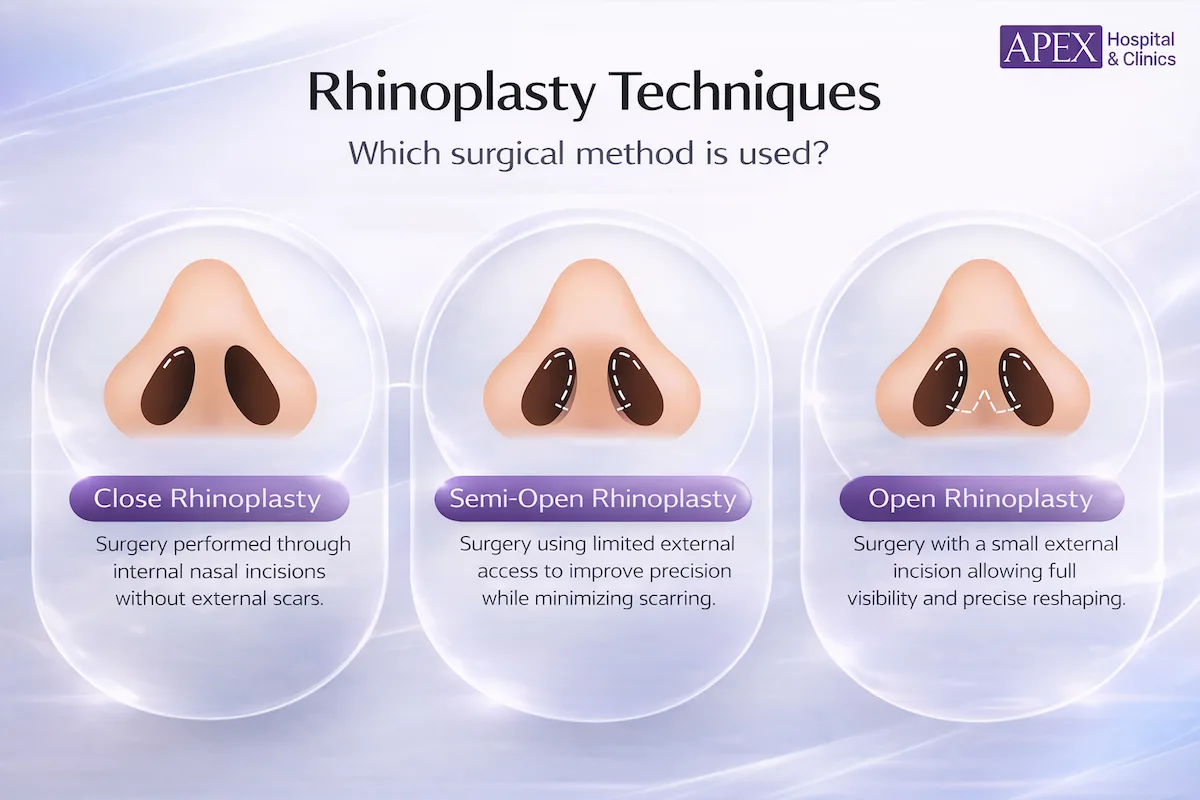
Closed Rhinoplasty
This technique involves making incisions entirely inside the nostrils, leaving no visible external scars. The advantages include a shorter surgery time and less swelling or bruising, leading to a faster recovery. It is ideal for those who only need to raise the bridge or make minor structural adjustments.
Open Rhinoplasty
In this technique, the surgeon makes an incision across the columella (the base of the nose) which connects to internal incisions. This allows the surgeon to lift the skin and clearly see the internal structure. It enables precise adjustments for complex cases, such as bone rasping, tip reconstruction, or using rib cartilage. It is suitable for revision cases or individuals with complex structural problems.
Semi-Open Rhinoplasty
A middle-ground technique between Closed and Open. Incisions are made inside both nostrils, providing more space for the surgeon to work and visualize the structure than a standard closed technique. This allows for more accurate tip adjustment and silicone placement. It is suitable for those who need tip refinement but do not have highly complex structural issues.
Materials Used in Rhinoplasty
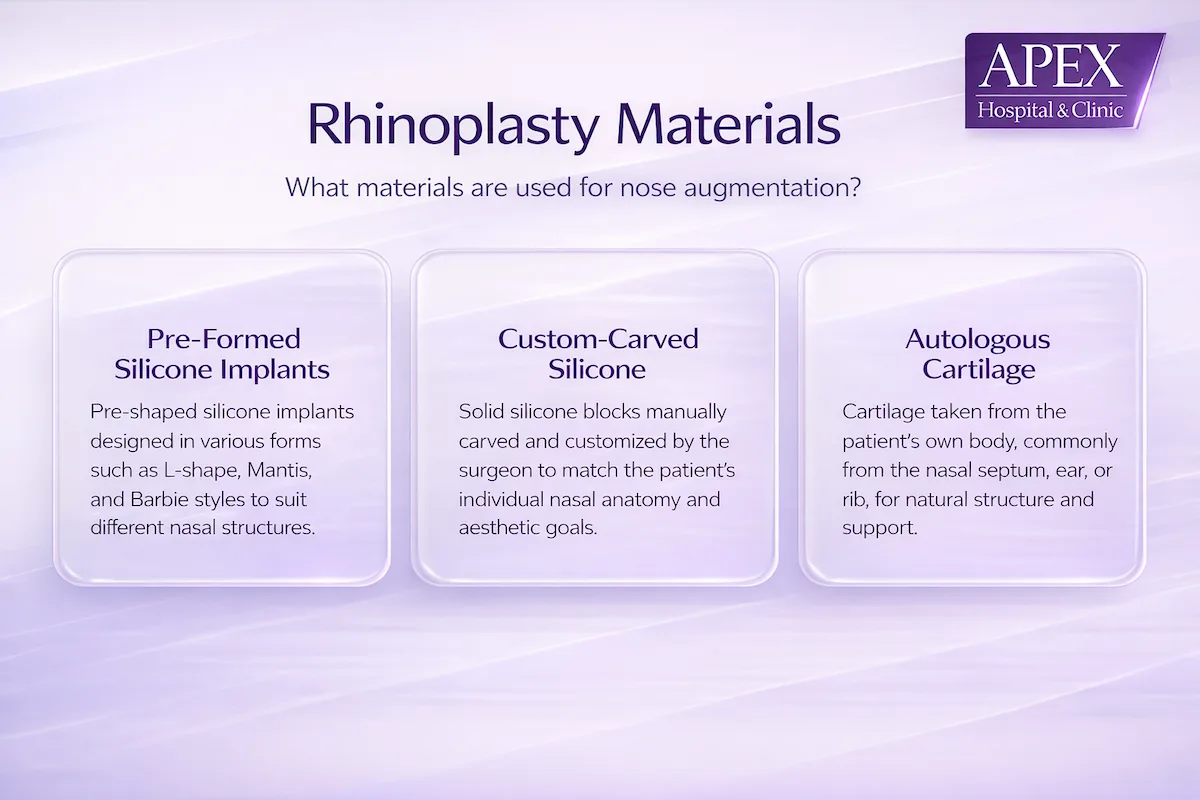
Choosing the right material is vital for the beauty and long-term durability of the result. Materials include both synthetic options and the patient’s own biological tissue. A surgeon will evaluate the most suitable choice based on individual anatomy.
Silicone
The most popular material because it is easy to mold and comes in various grades. Medical-grade silicone is highly flexible and biocompatible. It can be removed or adjusted in the future. It is ideal for those wanting a beautifully shaped, natural-looking high bridge.
Ear Cartilage
A natural material often used in conjunction with silicone, specifically at the nasal tip. It helps reduce pressure from the silicone, preventing the skin from thinning or the implant from perforating (poking through) in the future. Since it is the patient’s own tissue, there is no risk of allergic reaction or rejection.
Rib Cartilage
A popular material for Structural Rhinoplasty. It is ideal for those with very little nasal tissue, those who want a very high projection, or those who have had multiple previous surgeries (revisions). Rib cartilage is very strong and highly versatile but requires a highly skilled surgeon to harvest and shape.
Synthetic Tissue (Acellular Dermal Matrix)
A biological material designed to add softness to the nasal tip and act as a buffer between the silicone and the skin. It is perfect for individuals with thin skin or those who have experienced redness at the tip from previous implants.
Hybrid Technique
This technique combines the benefits of silicone and cartilage—usually silicone for the bridge and ear cartilage for the tip. This increases strength and safety against perforation while providing a soft, natural look.
Which Technique Suits Your Specific Problem?
Identifying the right surgical technique is essential to effectively address your unique nasal structure and achieve a perfectly balanced profile.
- Want a slight increase in height: Closed technique is best as it doesn’t require major structural changes.
- Short, flat, or upturned tip: Semi-Open technique allows the surgeon to adjust the tip length for a more natural look.
- Crooked nose or deviated tip: Open technique provides full visibility to correct the underlying cartilage and bone structure.
- Short nose or very thin skin (perforation risk): Open technique combined with ear or rib cartilage to add strength and protection.
- Want a dimensional, “pointy” tip: Semi-Open technique allows for detailed tip adjustment with minimal scarring.
- Unbalanced structure (wide base, thick nostrils, or hump): Open technique combined with Alarplasty or hump reduction allows for comprehensive reconstruction.
- First-time surgery with minor adjustments: Closed technique offers safety, small wounds, and fast recovery.
Popular Nose Shapes
Selecting the perfect nose shape is key to enhancing your natural beauty and achieving overall facial harmony. Discover today’s most popular styles, from subtle slopes to defined tips, to find the look that best suits your profile.
- Natural Look: Harmonizes with the original face; not too high or sharp.
- Teardrop Shape: Features a rounded tip that drops slightly, creating a soft, feminine look.
- Elevated Tip: Slightly lifts the tip from the bridge to create a charming, youthful appearance.
- Slope with Pointy Tip: A beautiful curved slope leading to a clearly projected tip.
- Upturned (Barbie) Shape: A noticeably upturned tip that makes the face look bright and cute.
- Mantis (Sharp/Defined) Shape: Focuses on a very sharp bridge and a high, projected tip for a fierce, defined look.

How to Choose the Right Rhinoplasty for You
Choosing the ideal rhinoplasty program requires a careful balance between your unique facial structure and your personal aesthetic goals. This guide highlights the essential factors to consider, ensuring you select a procedure that delivers both beauty and long-term safety.
- Consider original structure and flaws: Minor issues may only need Closed surgery; complex issues or revisions require Open surgery.
- Evaluate skin and tissue condition: Thin skin requires caution with silicone height; cartilage may be necessary to prevent thinning.
- Define your desired result: Communicate clearly with your doctor. If unsure, ask for a facial analysis.
- The Surgeon: Regardless of the technique, the surgeon’s skill in Plastic Surgery is the most critical factor for safety and beauty.
Who is suitable for Rhinoplasty?
Rhinoplasty is ideal for healthy individuals seeking to enhance their facial harmony, boost self-confidence, or correct functional structural concerns. Understanding the criteria for candidacy is the first step toward achieving a successful transformation that aligns with your aesthetic goals.
- People wanting to boost confidence or balance facial proportions.
- Those concerned about a flat bridge, large tip, hump, or crooked nose.
- Those needing to correct deformities from accidents or genetics.
- Those with functional issues, such as difficulty breathing due to a deviated septum.
- Healthy individuals with no serious medical conditions.
- Individuals whose facial structure is fully developed (typically age 18+).
- Those with realistic expectations.
Who is NOT Suitable for Rhinoplasty?
While rhinoplasty offers transformative results, certain medical conditions, age factors, and lifestyle habits may make the procedure unsuitable for some. Evaluating these limitations is crucial to ensuring patient safety and avoiding potential complications throughout the surgical and recovery process.
- People with uncontrolled chronic diseases (Heart disease, high blood pressure, diabetes).
- Individuals with bleeding disorders or those taking blood-thinning medications.
- Minors under 18–20 (whose facial bones are still growing).
- Pregnant or breastfeeding women.
- People with active skin or nasal infections.
- Heavy smokers (as it hinders healing and increases infection risk).
- Individuals with unrealistic expectations or Body Dysmorphic Disorder.
Benefits of Rhinoplasty
Rhinoplasty offers more than just aesthetic improvements; it can significantly boost self-confidence and enhance nasal function. Discover how this procedure harmonizes your facial features while providing long-term benefits for your overall well-being.
- Balances facial features.
- Boosts self-confidence and personality.
- Corrects structural flaws from birth or trauma.
- Improves breathing functions.
- Provides long-lasting results.
Precautions and Risks
Understanding the potential risks and necessary precautions is an essential part of making an informed decision about surgery. Being aware of these factors helps you manage expectations and ensures a safer journey toward your desired results.
- Post-op side effects: Swelling, bruising, pain, or temporary numbness.
- Infection risk: If post-op care is poor or the facility is substandard.
- Dissatisfaction: Results may vary due to original structural limitations.
- Implant migration: The material may shift if the nose is hit before it has settled.
- Perforation: Risk of the silicone poking through if it is too high for thin skin.
- Scar tissue (Fibrosis): Can cause the nose to change shape over time.
- Breathing issues: If internal structures are impacted during surgery.
Preparation Before Rhinoplasty
Proper preparation is the foundation of a successful surgery and a smooth, uncomplicated recovery process. Following these essential guidelines will ensure your body is fully ready and optimized for your upcoming transformation.
- Consult the surgeon: To evaluate structure and set realistic goals.
- Provide detailed health history: Allergies, chronic diseases, and all medications/supplements.
- Stop blood-thinning agents: Avoid Aspirin, Ibuprofen, Vitamin E, Fish Oil, and Ginkgo for at least 2 weeks.
- Stop smoking and alcohol: At least 2–4 weeks before surgery to ensure proper healing.
Steps of the Surgical Procedure
Knowing what to expect during each stage of the operation can help ease anxiety and set clear expectations for the process. This section breaks down the professional steps taken by surgeons to ensure precision, safety, and aesthetic success.
- Evaluation: The doctor analyzes the face and designs the shape.
- Preparation: Following pre-op instructions (fasting if necessary, stopping meds).
- Surgery: The surgeon performs the procedure using the chosen technique and materials.
- Follow-up: Appointments to monitor healing and remove stitches.
Post-Operative Care Advice
The final outcome of your rhinoplasty depends heavily on how well you care for yourself during the critical healing phase. Adhering to professional recovery tips will help minimize swelling, prevent complications, and protect your new nose shape.
- Cold Compress: Use for the first few days (avoiding the wound) to reduce swelling.
- Sleep with head elevated: Use high pillows for 1–2 weeks to minimize swelling.
- Soft Diet: Eat easy-to-chew foods; avoid spicy, fermented, or seafood items that might cause inflammation.
- Avoid Impact: No heavy exercise or heavy lifting.
- Do not blow your nose hard: Pat dry gently or sneeze with your mouth open.
- No alcohol/smoking: For at least 1 month.
- Glasses caution: Avoid resting glasses on the bridge; use tape to support them on the forehead if necessary.
- Attend all appointments: For stitch removal and progress checks.
Choosing a Clinic: What to Look For?
Selecting the right clinic is a vital decision that directly impacts both the safety and the beauty of your surgical results. Use these key criteria to identify a high-standard facility and an expert medical team you can fully trust.
- Certified Surgeons: Verify the doctor’s plastic surgery license.
- Standards & Technology: Certified by the Ministry of Public Health with sterile operating rooms.
- Real Reviews: Look at before-and-after cases from actual patients.
- Detailed Consultation: The doctor should personally analyze your face and explain the plan.
- Aftercare: Continuous follow-up services.
How Much Does Rhinoplasty Cost?
The investment for rhinoplasty varies depending on the surgical technique, the complexity of the case, and the surgeon’s expertise. Get a clear overview of the current pricing to help you plan your budget for this life-changing procedure. Prices vary based on complexity and technique:
- Closed Technique (Starting from 35,000.-): Focuses on the bridge, small incision, fast recovery.
- Open Technique (Starting from 120,000.-): Focuses on structural tip adjustment and correction.
- Open Rib Technique (300,000.-): 100% autologous (no silicone), highest safety, ideal for major revisions.
Note: Prices usually include hospital-standard operating room fees. A physical evaluation is required for an exact quote.
Before & After Reviews Rhinoplasty


Frequently Asked Questions (FAQ) about Rhinoplasty
Finding answers to common concerns is a crucial step in preparing for your cosmetic journey and making an informed decision. This section addresses the most frequently asked questions about rhinoplasty to provide clarity on recovery, safety, and expected results.
Does it hurt?
How long for swelling to go down?
Major swelling lasts 3–7 days; it significantly subsides within 2–4 weeks.
How long does it last?
It can last a lifetime if high-quality materials and proper techniques are used.
Is a tip graft necessary?
Can people with thin skin get a nose job?
Yes, but the height is limited, and cartilage or synthetic tissue is usually used to prevent perforation.
Recovery time?
7–14 days for initial recovery; 2 weeks for stitches to heal.
When will the shape be final?
You will see a clearer shape in 1–3 months, with full settling at 6–12 months.
Conclusion
Rhinoplasty enhances facial balance and confidence. Success depends on choosing the right shape, technique, and material. Proper preparation and post-op care are equally vital. Thorough research and professional consultation are the most important first steps.
Contact Channels
- Tel : 085 000 2001
- Line : @apexbeauty
- Tiktok : apexprofoundbeauty
- Facebook : APEX Hospital & Beauty Clinic
- Instagram : apexbeauty
- Youtube : Apex Beauty Clinic
- X (Twitter) : ApexProfound